Last updated: August 10, 2026
- In some cases, the FDA notes that generics can cost about 80% to 85% less than the brand-name product.
- A prescription can drop in price fast once a brand-name drug goes generic.
- Generic medications are lower-cost versions of brand-name drugs.
- They use the same active ingredient and are meant to work the same way.
A prescription can drop in price fast once a brand-name drug goes generic. Generic medications are lower-cost versions of brand-name drugs. They use the same active ingredient and are meant to work the same way. In many cases, generic medications can help lower costs, but you should ask a pharmacist or clinician whether a switch is appropriate for your medicine.
Quick Answer
A generic medication is a drug that matches a brand-name medicine in active ingredient, strength, dose form, and intended use. The FDA says generic drugs must meet the same quality and safety standards as brand-name drugs. Source: FDA, Overview of Generic Drugs.
What Makes a Medication Generic?
Once a patent on the brand-name version ends, a drug can usually show up as a generic. Drug companies can then make the same medicine under its generic name.
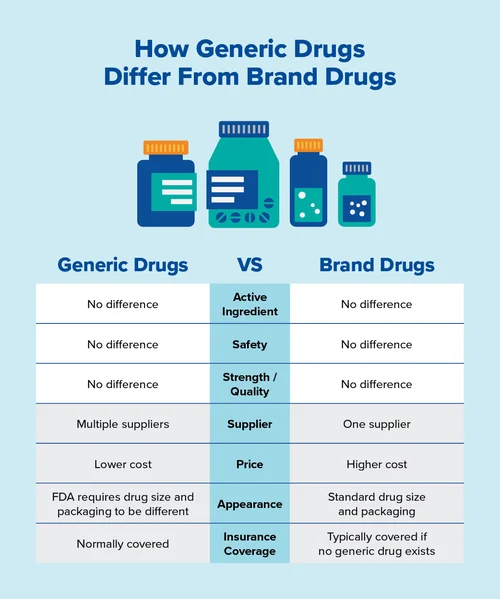
Generics must contain the same active ingredient as the brand-name drug. They must also be taken the same way and treat the same condition, but you should confirm any switch with a pharmacist or clinician. In most cases, the biggest visible differences are the pill’s color, shape, or packaging.
The FDA also requires generic drugs to be bioequivalent. So the medicine should get into the body at about the same rate and amount as the brand-name drug. Source: FDA, Generic Drugs: Questions & Answers.
Generic vs. Brand-Name: What Changes?
What stays the same:
– active ingredient
– strength
– dosage form, such as tablet or capsule
– intended use
What may change:
– inactive ingredients
– color and size
– shape
– packaging
– price
Inactive ingredients are the parts of a pill that do not treat the condition. These can include fillers, dyes, or coating materials. Most people never notice the difference. Still, some patients are sensitive to certain inactive ingredients, so a switch can matter for them, and a pharmacist can help you check.
Why People Choose Generics
The main reason is cost. Generic drugs are often much less expensive than brand-name versions. That can help people who pay out of pocket or have high copays, but the exact savings vary by drug and pharmacy. For example, many generic prescriptions cost significantly less than brand-name versions, and the savings depend on the medicine and market.
Lower cost can improve access to treatment, and a clinician or pharmacist can help you decide whether a lower-priced option is right for you. For someone who has to choose between skipping medicine and filling a prescription, a generic can make a real difference. If money is tight, ask a pharmacist or clinician whether a generic version is available. In some cases, the FDA notes that generics can cost about 80% to 85% less than the brand-name product.
How to Switch to a Generic: Simple Steps
If you want to use a generic medication, start with these steps:
- Ask your prescriber or pharmacist whether a generic version exists.
- Check whether the switch is allowed for your specific medicine.
- Compare the generic name on the bottle with the active ingredient on the brand label.
- Watch for changes after the switch, especially if you are sensitive to side effects, and ask a professional if anything seems unusual.
- Call your pharmacist or doctor if anything feels different or unclear.
This is especially useful when you pick up a refill and the pill looks different from before. For example, the strength may be the same even if the tablet looks different, but your pharmacist can confirm the details.
Mistakes and Risks to Watch For
A common mistake is assuming every generic swap is automatic. Not so. That is not always true for every medicine. Some medicines need closer monitoring, especially drugs with a narrow therapeutic range. In those cases, small changes can matter more.
Another risk is ignoring a reaction after a switch. If you get a rash, stomach upset, or a change in how the medicine seems to work, contact a healthcare professional. Do not stop a prescription on your own unless a clinician tells you to.
Also, do not assume that a cheaper pill is a weaker pill. The point of a generic is to match the brand-name drug in the ways that matter for treatment. The price tag can fool people here; cost alone should not be the only factor in a switch.
When a Brand-Name Drug May Be Better
Some people do better staying with the brand-name version. That can happen if they react to an inactive ingredient in a generic, or if their doctor wants them to stay on one exact formulation for careful dosing.
This is the main trade-off: generics save money, but they may not feel identical for every patient. That does not mean they are less effective overall. It does mean your personal response matters. For patients on medicines that require careful dosing, a clinician should review the choice before any change.
Bottom Line
Generic medications are FDA-approved alternatives to brand-name drugs. They use the same active ingredient and are designed to work the same way. For many people, they are a smart, lower-cost choice.
Still, the best option depends on the medicine and the person taking it. If you have allergies, side effects, or a drug that needs close monitoring, ask a pharmacist or prescriber before switching.