Last updated: August 10, 2026
A drug bill can spike fast. Start there.
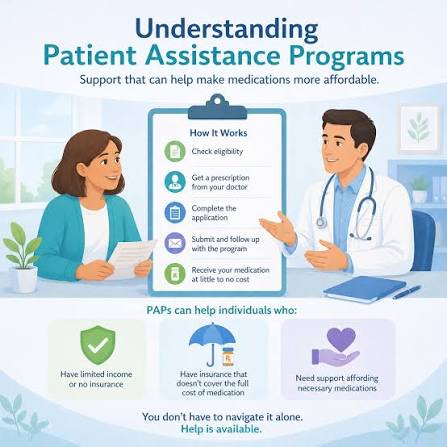
Check three things first: the medicine, your income, and your insurance status. This guide explains how to qualify for a patient assistance program and match your situation to the program’s exact requirements. Most patient assistance programs are run by drug makers, and each one sets its own rules. So the fastest path is to compare your details with the published criteria, not to guess. According to the NeedyMeds patient assistance overview, many programs require documentation before review.
Quick Answer
You usually qualify by meeting the program’s income limit, living in the right place, and needing the covered medicine. Certain programs also ask whether you have insurance, whether your plan denies coverage, or whether your copay is still too high. Read the application before you gather papers; otherwise, you may waste time chasing the wrong documents. A program may ask for income at or below a set percentage of the federal poverty level, such as 200% or 400%, depending on the drug maker.
Key Facts / Key Takeaways
- How qualify patient assistance program: match the medicine, income, and insurance rules to the exact application.
- Many programs require proof of income, proof of address, and a current prescription.
- Certain programs use a household income cap such as 200% to 400% of the federal poverty level.
- Approval is not automatic, and processing can take days or weeks.
- If you have questions, contact the program, your pharmacist, or your prescriber before you submit.
What Programs Usually Ask For
Can you show need and fit the limits? That is the real test.
Usually, you will need proof of income, proof of where you live, and a current prescription. Many programs also ask for insurance cards, denial letters, or a summary of benefits. The CMS marketplace guide is a useful place to verify insurance terms and coverage language.
A few programs use household income as a percentage of the federal poverty level, while others use a hard dollar cap. There is no single income number that works everywhere, because each company sets its own bar. If a form asks for tax returns, pay stubs, or a Social Security award letter, send the exact item listed. For example, one program may accept one recent pay stub and one tax return, while another may require 2 to 3 months of pay records. That’s the rub.
If You Do Not Have Insurance
No insurance can help in some cases, but it does not automatically mean approval. Some programs are built for uninsured people. Others are only for people who are underinsured, or who cannot afford a specific brand-name drug.
Start with the drug maker’s site and look for “patient assistance” or “financial help.” Then check whether the program covers your exact medicine. One missed detail can slow the case down by days or weeks. Ask your prescriber whether a cheaper generic works first. For how qualify patient assistance program decisions, the exact drug name matters just as much as income.
If You Have Insurance but Still Cannot Afford the Copay
Insurance can still leave you with a large out-of-pocket bill. That is common with high-deductible plans, specialty drugs, and brand-name medicines. Certain patient assistance programs help only uninsured people, but others will review insured applicants if the copay is still unaffordable.
This is where the program rules matter most. Look for phrases like “commercial insurance only,” “no government insurance,” or “copay support only.” If the wording is muddy, call the program line and ask one direct question: “Do you accept someone with insurance who still cannot afford this drug?” Simple. That saves time and cuts the guesswork. In how qualify patient assistance program reviews, a brief phone call can confirm whether a plan is eligible before you send paperwork.
Why These Programs Are Worth Checking
The main benefit is lower cost. In some cases, a program may cover part or all of the medicine cost for people who qualify. That can turn an impossible monthly expense into something manageable. The Patient Advocate Foundation also explains that financial help may reduce treatment interruptions.
They can also help you stay on treatment, but you should still talk with your prescriber or pharmacist about whether the program fits your care plan. Skipping doses because of price can lead to worse health and more stress. Even when a program does not fully cover the drug, partial help can buy time while you look for a longer-term option.
The Best Alternatives If You Do Not Qualify
If a patient assistance program says no, do not stop there. Ask about copay cards, foundation grants, hospital charity care, 340B clinics, discount pharmacies, or a lower-cost generic. In some cases, your prescriber can also switch you to a different medicine with the same effect but a lower price.
A pharmacist can help you compare options quickly. So can a social worker, case manager, or patient advocate. These people often know which forms to use and which programs are open right now. For how qualify patient assistance program alternatives, the RxAssist directory can help you compare charity and manufacturer support options.
Common Mistakes That Cause Delays
The most common problem is missing paperwork. Another is using old income numbers or an expired insurance card. A third is applying for the wrong program. If the drug name, dosage, or prescriber is wrong, the review can stall.
Before you submit anything, make sure every page is signed and dated. If the form asks for household size, use the same number you used on tax or benefits forms. Small mismatches can trigger a denial or a request for more documents.
One Honest Limitation
These programs are not guaranteed to solve every affordability problem. Approval can take time, and coverage can end after a set period. Some programs also exclude certain insurance types or stop helping after you hit a yearly limit. If you need medicine right away, ask your pharmacy and doctor about a short-term bridge plan while the application is pending.
What to Do Next
Make a folder with your income proof, insurance details, prescription info, and a list of the medicines you need. Then apply to the program tied to your drug, not just any program you find online. If you are unsure about any rule, call the program before you submit. One clear answer from the source is better than a week of rework.